Insulin Resistance Beyond the Scale: What It Really Means for Your Energy & Hormones
Jan 05, 2026 A beginning year note from an RN who knows better.
January often arrives with a familiar message:
Fix your weight. Reset your body. Try harder.
But as an RN who works with high-achieving women every day, I want to start this year with a different conversation—one rooted in physiology, not pressure.
Because insulin resistance isn’t a weight problem.
It’s an energy problem.
A hormone problem.
And often, a burnout problem hiding in plain sight.
If you’ve ever thought, “I eat pretty well… so why am I still exhausted?” This post is for you.
Why Insulin Can Be an Early Signal (Even When Labs Look “Normal”)
One important nuance many women don’t hear: insulin often becomes elevated years before blood sugar crosses into abnormal ranges. This makes fasting insulin a valuable early signal of metabolic strain — not a late-stage diagnosis.
Chronically elevated insulin — even when glucose appears normal — is increasingly recognized as a contributor to cardiovascular disease, neurodegeneration, and inflammatory conditions. This is why insulin resistance is better understood as a whole-body signal, not just a diabetes concern.
In early insulin resistance, the body often compensates by producing more insulin to keep blood sugar stable. Over time, that compensation can become unsustainable — contributing to energy crashes, hormone disruption, and eventually rising glucose.
What Insulin Resistance Really Is (and What It Isn’t)
Insulin resistance is commonly explained as “poor blood sugar control” or something that only matters if weight is involved. That explanation is incomplete.
At its core, insulin resistance means:
-
Your cells are less responsive to insulin
-
Glucose stays circulating instead of fueling your cells
-
Your body compensates by releasing more insulin
The result? Plenty of fuel in the bloodstream—but not enough getting into the cell where energy is actually made.
At the cellular level, insulin resistance means cells don’t respond effectively to insulin’s signals, so glucose stays in the bloodstream instead of being used for energy — a process detailed by the National Institute of Diabetes and Digestive and Kidney Diseases.¹
That’s why so many women feel:
-
Drained despite “normal” labs
-
Foggy mid-morning or mid-afternoon
-
Wired at night, exhausted in the morning
This isn’t laziness or lack of discipline. It’s cellular miscommunication.
 Why the Scale Misses the Point
One of the biggest myths I see in healthcare is that insulin resistance always shows up as weight gain.
In reality, many women with insulin resistance:
-
Maintain a stable weight
-
Are active or high-functioning
-
“Look healthy” from the outside
But inside, their metabolism is working overtime.
When insulin stays elevated:
-
Fat storage becomes easier
-
Fat access becomes harder
-
Energy production becomes inefficient
This is why weight-focused strategies often backfire—they increase stress hormones and worsen the very physiology we’re trying to heal.
The Hormone Cascade No One Talks About
Insulin doesn’t operate in isolation.
Insulin’s role in metabolism is deeply interconnected with other hormones like cortisol and thyroid, which together regulate how your body uses and stores energy — a relationship explained in clinical hormone resources from The Endocrine Society.²
Chronically elevated insulin affects:
-
Cortisol (stress hormone)
-
Estrogen metabolism
-
Progesterone balance
-
Thyroid signaling
This is why insulin resistance often shows up as:
-
Stubborn fatigue
-
Sleep disruption
-
Mood swings or anxiety
-
Cycle changes or worsening PMS
-
Increased sensitivity to stress
What many women are told is “just aging” or “hormones being hormones” is often metabolic strain layered over chronic stress.
 Why High-Achieving Women Are Especially Vulnerable
This matters deeply for women in healthcare and leadership roles.
Long days.
Skipped meals.
High responsibility.
Constant decision-making.
These aren’t personal failures—they’re predictable metabolic stressors.
Over time:
-
Blood sugar becomes reactive
-
Cortisol stays elevated
-
Insulin signaling becomes inefficient
Your body adapts to keep you functioning. But adaptation isn’t the same as resilience.
Energy Is Currency—And Insulin Is the Exchange Rate
I say this often because it matters:
Energy is currency.
How your body manages blood sugar determines how well you can spend that energy—at work, at home, and in your health.
True metabolic support doesn’t come from:
-
Eating less
-
Exercising harder
-
“Starting over” every January
It comes from:
-
Predictable nourishment
-
Nervous system regulation
-
Strategic recovery
-
Consistency that fits real life
This is how insulin sensitivity improves—quietly, steadily, and sustainably.
 A Smarter Way Forward This Year
If you’re entering this year feeling:
-
Tired of chasing motivation
-
Frustrated by “normal” labs but abnormal energy
-
Ready for strategy instead of pressure
Know this:
Your body isn’t broken. It’s responding to years of demand without enough recovery. And that response is modifiable. This year isn’t about forcing change. It’s about working with your biology—not against it.
Ready to Learn What Your Energy Is Telling You?
If this resonates, I invite you to start with awareness—not overhaul. Insulin resistance isn’t just about blood sugar or weight — it affects energy production, stress hormones, thyroid signaling, and overall metabolic resilience. Early signs can show up even if your labs look “normal.” Small shifts in nourishment, recovery, and daily rhythm can improve insulin sensitivity sustainably.
Because healing isn’t hustle.
It’s strategy.
And you deserve one that supports the life you’re actually living. If you want more support creating a metabolism-friendly, burnout-proof plan that works for you in the new year 2026:
➡️ Schedule your Free Discovery Call
Let’s map out your hormones, stress load, and energy needs — RN-informed, root-cause-focused, and personalized.
References
Ready to Reset?
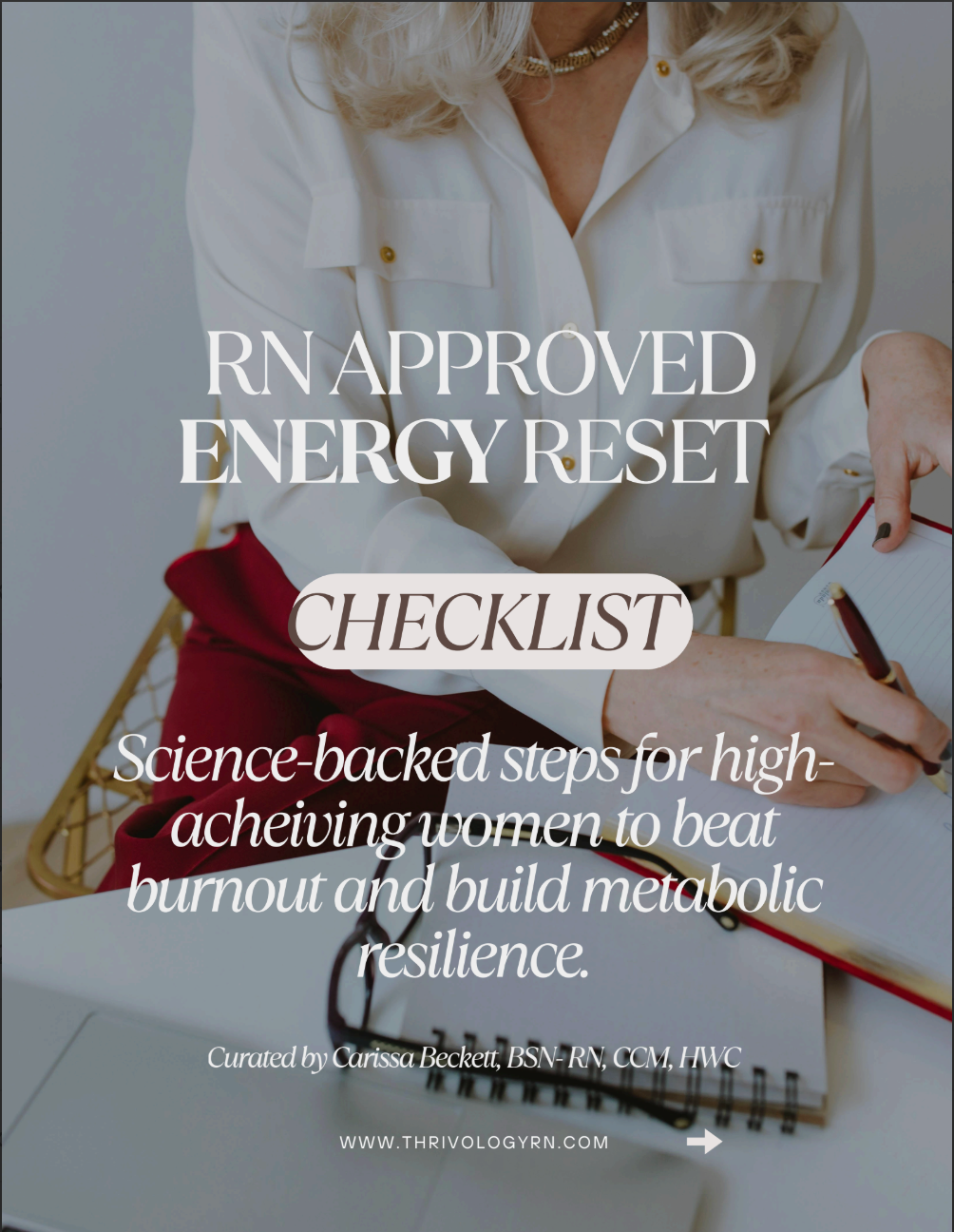
🎁 Grab your FREE RN-Approved Self-Care Checklist
Start your resilience journey with 6 daily shifts to help you reset your energy and metabolism—RN style.
Stay connected with news and updates!
Join our mailing list to receive the latest news and updates from our team.
Don't worry, your information will not be shared.
We hate SPAM. We will never sell your information, for any reason.
Meet the Author